Scintillating Scribbling
on James Wolcott

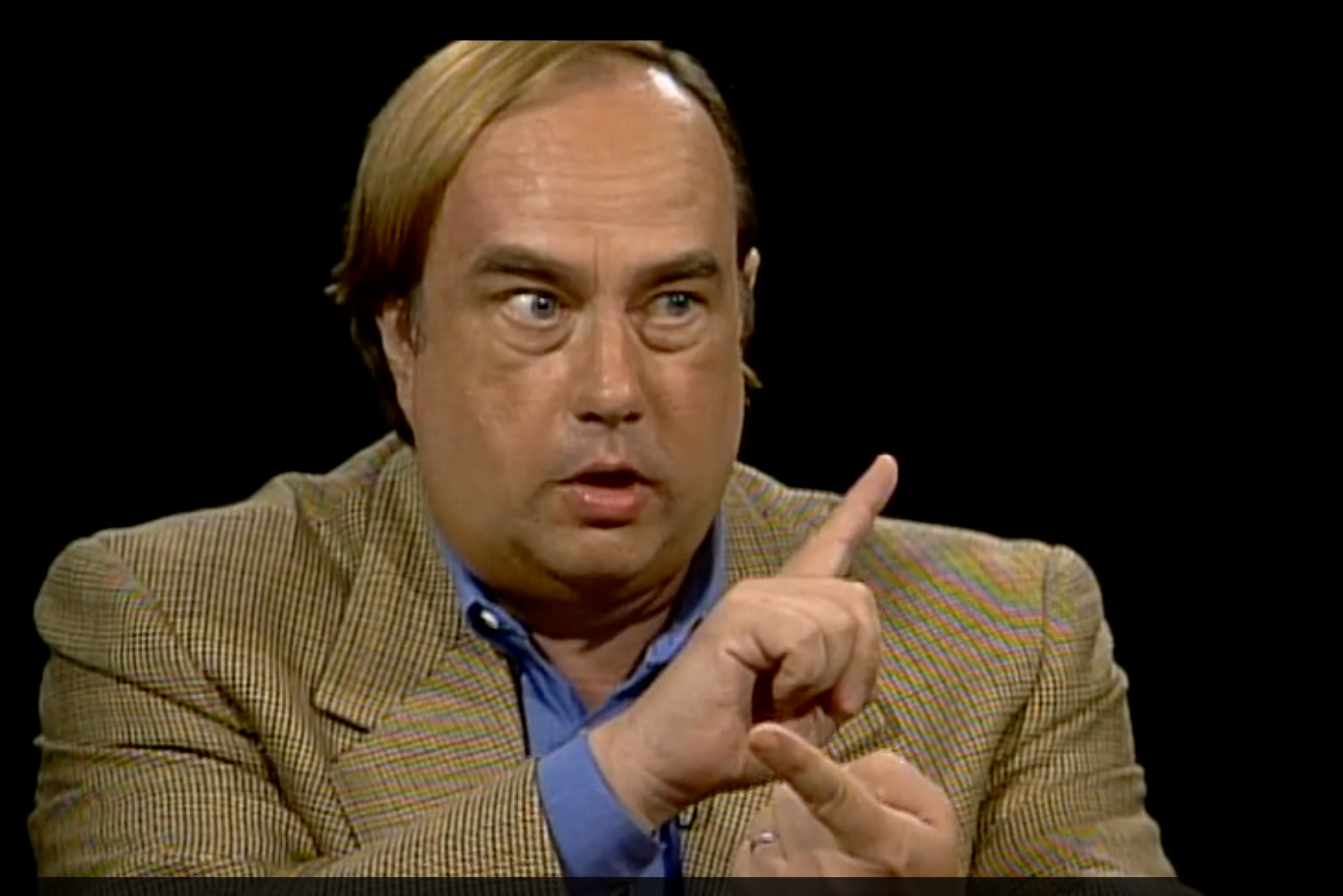
Here’s a proposition for you: the American vernacular that emerged between roughly 1920 and 1970 was the second great peak of the English language, right up there with the era of Shakespeare and Donne. The Elizabethans had the printing press and the English Bible and reams of Ovid and Cicero beaten into them by country schoolmasters. Americans had immigration and mass media, which took Black street slang and Yiddish irony and showbiz argot and Park Avenue elocution and crashed it all together, creating the high-low bebop register found (in various combinations) in the work of Saul Bellow, Raymond Chandler, Cole Porter, Lorenz Hart, Cab Calloway, Slim Gailliard, His Girl Friday, Thomas Pynchon, Jack Kerouac, Tom Wolfe, Guys and Dolls, Dorothy Parker, Mad magazine—you get the idea. Other worlds and times might have had the edge on the nonverbal aspects of art, and it’s understandable that one might prefer Dickens or Dostoevsky to these priapic midcentury Yankees. But when it comes to not what you say but how you say it, when it comes to rhythm and slang, assonance and resonance, velocity and compression, words, words, beautiful words, all I can say is: buy American, baby.
And no critic captured the sheer pleasure of words in this period quite like James Wolcott, who came in at the end, in the early 1970s, and thus had the verbal riches of the entire era at his disposal. Eagle-eyed readers of A Good Hard Stare may have noticed that this is the third in a trilogy of tributes to the great essayists of the past few decades, a digestivo of sorts to the first two entree-sized entries on Janet Malcolm and Susan Sontag (found here and here). Malcolm and Sontag are colossi by anyone’s metric, when discussing them you reach for phrases like “keen moral intelligence,” “penetrating insight” and “prodigious erudition.” And it’s certainly true that I could read The Silent Woman and Against Interpretation every day for a week and twice on Sunday and find something new to love every time. But Wolcott is pure fun, in a way they aren’t. Reading him is like spending time with Burt Lancaster and Tony Curtis in Sweet Smell of Success, with its hyperreal hepcat dialogue (“The cat’s in the bag and the bag’s in the river,” “If you’re funny, I’m a pretzel,” and so forth). If he has a critical philosophy, it’s that every sentence should contain an image that surprises and delights. He disdains archons of high seriousness like Sontag (in his memoir Lucking Out he refers her practice of giving endorsements as “swinging her incense ball,” and describes her acolytes as having a “pinched anality.”), instead favoring an all-but-forgotten alterna-canon of critics with schlemiel-y names like Seymour Krim and Marvin Mudrick. His style is snappy, witty, jazzy, full of Walter Winchell patter and alliteration. It’s one developed not at the academy, or in the demure pages of Mr. Shawn’s New Yorker but at the Village Voice and Vanity Fair, where it had to compete for eyeballs with maverick rock critics and true tales of Fear City at the former and with scratch ‘n sniff perfume ads and Annie Leibovitz glamour shots at the latter. Boring or puffed-up criticism was (with certain exceptions) quickly shown the door in the glory days of those outlets. Wolcott seems to have decided he would simply never be boring.
Though his purchasable output is relatively small—one big best-of collection (Critical Mass), one slight-but-charming novel (The Catsitters), one memoir (Lucking Out), and one book-length anatomy of Bush-era conservative media (Attack Poodles and Other Media Mutants, I have to admit I skipped this one)—Wolcott has occupied a visible perch nearly from the beginning. A college dropout from Maryland, he arrived in Manhattan like some Balzacian arriviste, with nothing to his name but a letter of introduction. Luckily, said letter was from no less than Norman Mailer, recommending the young go-getter to Dan Wolf, editor of the Village Voice, and after a bumpy start Wolcott found himself a place in the fizzing, sparking laboratory of journalism and criticism that was the Voice in the 1970s. Editorial changes led to a quick climb up the ladder for Wolcott (“Up blew the whale spout and on a spume of foam I flew,” as he mellifluously puts it) and he settled into a role reviewing music, television, and film, the latter under the tutelage of Pauline Kael, whose role in Wolcott’s life and the life of his fellow “Paulettes” is given many pages in Lucking Out. I’ve never gotten on Kael’s wavelength as a critic—a real you-had-to-be-there phenomenon, it seems to me—and Wolcott’s accounts of her and her toadies whispering loudly through screenings and then retiring to the Algonquin to snicker the night away frankly sound like slow death to me, but there must have been some alchemy there, because Wolcott kept improving, graduating from 1000-word quickies at the Voice to longer, looser work, first in Harper’s, then in a long-running column for Vanity Fair. (Lucking Out ends at the close of the 70s, but 80s Wolcott features as a minor character in Tina Brown’s Vanity Fair Diaries, “pale and raffish,” exuding “vague, downtown hostility.”)
My favorite Wolcott essay from this era, which will give you a taste of his Groucho-Marxian attitude towards the pretentious and powerful, is one of his last for the Voice: “Knowledge is Good? The Intellectual Killer Elite,” a long dispatch from a 1980 conference put on by the literary magazine Salmagundi at which now-chieseled-in-stone names like Sontag, Christopher Lasch, George Steiner, and Leslie Fiedler mused publicly on the fate of capital-W capital-C Western Culture. For those of us who are prone to romanticizing the era when the New York Review of Books really meant something, the essay is a welcome and hilarious dose of reality, showing as it does that these 92nd Street Y bull sessions were just as ghastly then as they are now. God, how ridiculous and humiliating the “public” part of “public intellectual” can be! Wolcott’s wryly defamiliarizing blow-by-blow is a welcome pricking of the balloon; Fear and Loathing in Las Vegas for nerds.
It was a Luis Buñuel nightmare, invisible hands gripping us to the chairs as swallows chirped in Esperanto—a subcommittee meeting at the United Nations couldn’t have been more soul-stifling. It wasn’t all boredom: Sontag, after needlessly fluffling her feathers to inform us that she had slaved “five years on the six essays” in On Photography, spoke at some length about the Americanness of American photography: Fiedler, ebullient as Falstaff in an ale-house, claimed that a male sexist conspiracy was responsible for Harriet Beecher Stowe being denied her great due (sighs, groans); and [Gerald] Graff stirred the audience to hisses when he told them they didn’t ask good questions. As if to prove his point, a Vietnam veteran who had asked a question the previous day complained that his query hadn’t been satisfyingly answered. [Stanley] Kauffmann said, Excuse me, I thought I had answered your question; no, said Sontag, I don’t believe you did, Stanley. Well, why don’t you ask your question again? said Kauffmann, the Soul of Liberal Reason. And, dropping a needle into a groove, the man said, “I’m a Vietnam veteran …” and reasked his question word for tiresome word.
The 1990s found Wolcott following Tina Brown to The New Yorker, before retreating back to Vanity Fair—to hear Dwight Garner (!) tell it in a 1997 Salon article on the reign of Queen Tina, he was “boxed into the TV beat,” at the New Yorker, “[grappling] futilely with an endless parade of talk shows and Fox sitcoms.” He left Vanity Fair again in 2018 (or was gently shown the door after the fall of the Graydon Carter regime—we’ll leave that one to the magazine historians) but remains active to this day, popping up regularly at Carter’s Air Mail and Leon Wieseltier’s Liberties. The fastball has perhaps lost a few ticks—the smug anti-Bernie Bro essay in Liberties is a tough sit, and the long demolition job on the New York Times in the same publication should be good but has a certain sweatiness to it—but the pen mostly still flashes and whizzes, bringing verbal dynamism to the buttery-smooth airport-lounge stylings of the former and color and character to the somber Partisan-Review-revisited pages of the latter. He’s still a drop-everything-and-read writer for me, which is saying something when the fate of so much talent is to languish in my dozens of browser tabs for days, and to be closed unread when my laptop, overburdened, begins to emit steam and sparks.
His best period, however, is his late 2010s and early 2020s work at the London Review of Books, which allowed him to stretch out, step away from the weekly grind of talking about Mare of Easttown or some other now-forgotten streaming product, and unfurl luxurious seven, eight, nine thousand word dispatches about the great and not-so-great writers of days just gone by: big names like Bellow, Roth, and Sontag, and also-rans like Norman Podhoretz and William Styron (any family resemblance between his essays on Norman P. and Susan S. and my own is, I assure you, purely uncoincidental). Biographies and collected letters were just beginning to emerge for these recently or nearly-dead figures, so the time was right for a summing-up, a final verdict rendered in technicolor prose, and these long, exploratory riffs on the pleasures and failures of an entire career proved to be the ideal form for Wolcott: more substantial than his quick takes for Vanity Fair and the like, but not so long that his florid style begins to grate. Consider the following, on Roth and the ill-fated Blake Bailey biography. This is criticism as brainy standup or Portnoyish-Herzogian monologue: arguing with yourself, arguing with the world, making a performance of your ambivalences and contradictory feelings and rendering it as a neurotic, brilliant stream of prose.
Exemplary craftsman, incorrigible satyr, subversive joker, avid grievance collector, liberal humanist, good son, bad husband, bountiful benefactor, Philip Roth in his prickly contrarieties aroused an ambivalence unlike that of almost any other American writer, and this ambivalence may have been what helps keep him alive for us, always under contention, a disputable proposition. Or kept him alive because, from here on, who the hell knows? I’ve been switching tenses around like a three-card monte dealer because I don’t know where we are with Roth. He’s a great writer but is he a great writer? And what does ‘great writer’ mean now anyhow? I find that I’ve gone numb of feeling for and about Roth in the study of his dinosaur bones. He has been abstracted into unreality. I almost feel sorry for his ghost. Roth’s glowering omnipresence this spring, thanks no thanks to the Bailey imbroglio, has obliterated him as a writer citizen and former earthling, and substituted in his stead Philip Roth, a man-shaped mass of dark matter sucking in everyone’s antipathies, not so much cancelled as stencilled black.
More than any other jobbing critic, I think, Wolcott has made me consider the (brace yourself) purpose of criticism. After all, guys like him aren’t theorists pursuing some specific aesthetic program or using literature and culture to chart the limits of the Liberal Imagination or otherwise intoning with the seriousness of a Trilling or a Sontag or a James Wood or any other incense-swinger. Those long LRB essays I adore, for example—a maximally uncharitable reading would accuse them of being not much more than Wikipedia pages in colorful drag, leavened with the occasional sprinkle of opinion or sardonic aside. More fun than Wikipedia, to be sure, but what’s that sort of thing doing, besides providing a few chuckles? Is there really honor in being a glorified summary merchant, or in leveling a few rude jibes or judicious spoonfuls of praise at some work of art which someone labored mightily to bring into this world?
My answer, and Wolcott’s, I suspect, would run something like this: when you really care about something, whether that care takes a positive or negative form, you want to add your own stamp to it, want to make your interpretation part of its greater objecthood, like a jazz musician laying into a hoary old Broadway number like “All the Things You Are” or “Night and Day.” And the best way to do that is through a language of freshness, invention, and variety which, at its best, leaves an indelible imprint, adds a little dab of detail to the great canvas of the world. I’ll never look at a magazine masthead again without thinking of Wolcott describing the Hudson Review’s “bullpen of hard-throwing critics.” Every time Frank Sinatra floats over the speakers, I think of Wolcott’s description of his “Manhattan-skyline voice” (such an obvious descriptor, and yet no one had ever thought to employ it). The sentences of his Village Voice comrade James Tipmore he describes as having “a white-birch quality: lean, upright, singular.” Once read, never forgotten, Wolcott sentences at their best are little bursts of mind-altering joy.
So whither the Wolcottian scribbler? Lucking Out, like all these 70s New York memoirs which some sick compulsion forces me to purchase by the truckload, has an elegiac tone to it. Things were great then, even though you might get knifed on the subway, now they’re not so great. Critics were important and interesting, now they’re not. An omnivorous cultural and critical public, not yet hit by AIDS, high rents, and the collapse of media, would go to a Balanchine ballet in the morning, a new Coppola flick in the afternoon, and CBGB’s at night, now we all stay in and order DoorDash and watch Beast Games, and so on and so forth. To be fair to Wolcott, he published Lucking Out in 2012, right as the old sequoias were falling and no green shoots had yet emerged to take their place, and anyway, buying a memoir like this and getting annoyed that it contains those-were-the-days sentiments is like ordering a bacon cheeseburger and complaining about the cholesterol.
Yet as I read it I thought of my own circle, of the many who parlayed comments section cut-and-thrust and online graphomania into something resembling success. I’m not trying to be cute when I say this: I’ve read a lot of essays in my time and I think you could put a masthead of my peers— John Pistelli, Naomi Kanakia, Sam Jennings, Ella Dorn, James Tussing, and many more—up against any murderers-row lineup from the Village Voice and its ilk and come away with, if not a knockout, at least a hard-fought ten rounds. And, if I can humbly offer my own example, exactly one year ago as I write this I was holed up in an AirBnB, wondering if my apartment was going to burn down in the LA fires and writing an essay for Metropolitan Review, the first piece of writing I ever got paid for. I was just some schmuck, obsessed with Wolcott and with Martin Amis and Peter Schjeldahl and all those other lords of language. Now I’m still some schmuck, but things have improbably progressed to the point where I can, if I squint, say to myself what Mailer said to Wolcott in his letter: “I think you have a career.” “So much is gone, stricken from the scene,” begins Lucking Out. So much indeed, but all is not lost. The institutions may change or collapse, the money may dry up, and the cultural power of the writer may shrink. But as long as critics like Wolcott are around to inspire, this deeply silly vocation, this compulsion to transmute experience into words, will continue to call to a certain subset of weirdos. Wolcott said as much himself in his introduction to Critical Mass, so let’s let him play us off the stage:
Non-practitioners envy the life of a writer, even if that life isn’t what it used to be, because for all of its anxieties and discouragements, writing is the greatest form of aviation that you can perform while firmly planted: the freedom, the vistas, the right word snapping a sentence to attention like the click of a gun, the passages that stretch into long solos, the nights when everything recedes and you feel as if you’re the only one awake in the world: welcome to the pros.
Henry ‘drop-everything-and-read’ Begler
I think we'd all be a little better off if every critic read him before they got to work. We'd at least have a bit more fun. Then again maybe not – he's that tier of good that makes you want to snap the pen in half and give it all up because you know you'll never match it. Spot-on piece